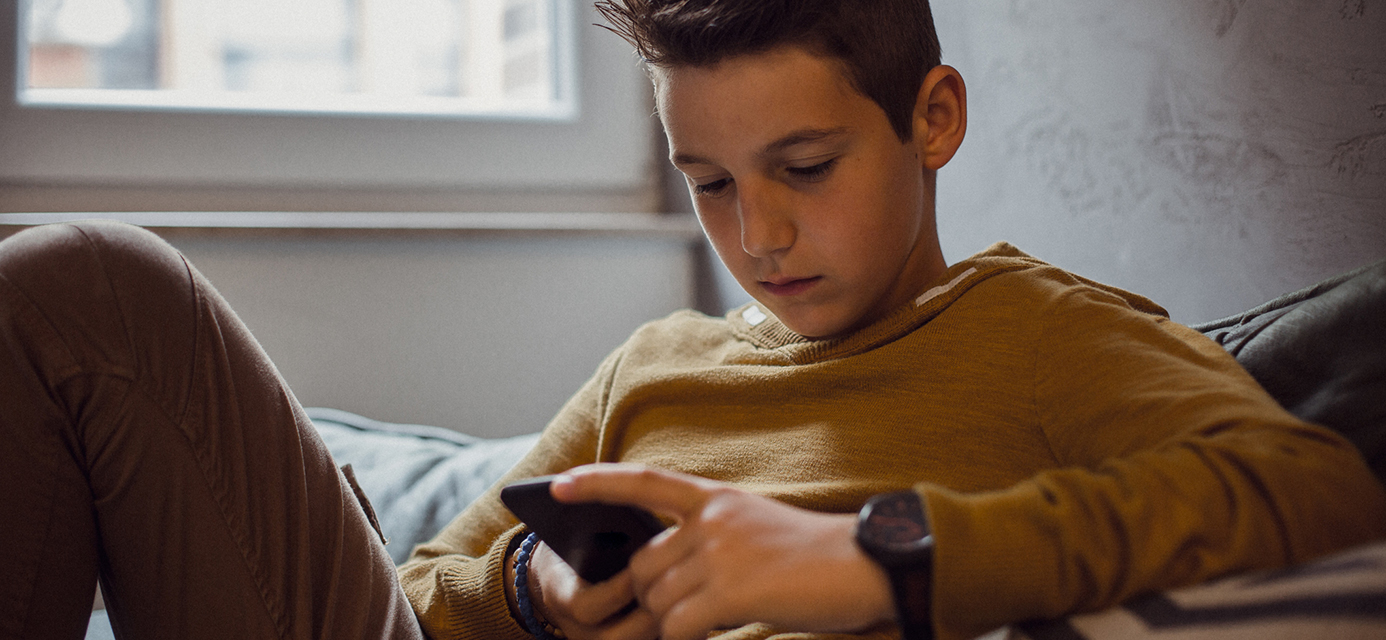
Parents of young teens are facing a dilemma they never had to navigate during their own childhoods: how to monitor teen social media usage. Social media can be a fun and beneficial way to help kids learn about the world and interact with friends and family. However, too much online use too early can impair brain development and potentially have negative long-term health consequences.
So how can you tell how much is too much? And how can you help your kid navigate online spaces safely and securely? Setting device limits, monitoring usage, and having ongoing discussions about social media and the digital world are good places to start.
Key Takeaways
- Over 93 percent of American teens use social media regularly, with Youtube, Instagram, and Snapchat among the most popular platforms.
- Negative effects of social media include harmful content, increased anxiety and depression, and reduced sleep and exercise.
- Parents can set reasonable limits on teen social media use and monitor teen’s activity by ensuring talking with them about their experiences.
- Because of its inability to empathize or offer compassion, critics say AI should only function as a complementary component of mental healthcare.
Children’s Social Media: The Good and the Bad
Teens can’t escape the influence of the online world. Over 93 percent of American teens use social media regularly, with Youtube, Instagram, and Snapchat among the most popular platforms. They often have their phones with them nearly 24/7, in school, at home, and everywhere in between. And with the evolution of AI and other technology, social media’s reach continues to widen.
This can be a good thing—phones offer kids a way to connect with their parents and stay safe. Teens report using social media for advice and to inspire creativity. For many teens, especially those among marginalized groups, such as people of color and LGBTQ+ teens, social media can be a place to find support and connect with others like them.
Negative Effects of Social Media
Despite the positives, some impacts of social media are still not entirely clear, especially the effect on developing brains. New findings suggest that several features of social media may negatively impact teens, including the following:
- Harmful content, such as videos or photos idolizing self-harm behaviors, violence, or disordered eating, may be difficult to filter out.
- Push notifications and “infinite scroll” features take advantage of young people’s underdeveloped impulse control.
- Forming in-person friendships and peer relationships is particularly important for young people, and social media may detract from the healthy development of such connections.
- Growing bodies need sleep and exercise. Social media may prevent young people from getting enough sleep, spending enough time outside, and getting enough physical activity.
- Social media may increase feelings of loneliness, anxiety, and depression.
Should Parents Monitor Kids’ Social Media?
Is it okay for parents to monitor their children online? In many cases, yes. The US Surgeon General and American Psychological Association recommend parental monitoring and guidance of their teen’s social media usage, especially for younger teens aged 10–14.
As a parent, you should absolutely be enforcing age restrictions, coaching your teen on appropriate social media usage, and discussing the benefits and drawbacks of social media with them.
Questions?
We know that reaching out can be difficult.
Our compassionate team of experts is here to help.
Call us at 877-929-5105
or complete the form below.
However, it’s also important to consider your child’s privacy. While parental monitoring and involvement is crucial in most cases, intruding on your teen’s online life may or may not be appropriate. More significant involvement is necessary when your teen is exhibiting signs of problematic social media use.
5 Tips for Monitoring a Teen’s Social Media Accounts
While you can’t control everything about your teen’s social media experience, you can set reasonable limits on their usage. Ultimately, it’s parents’ responsibility to keep teens safe on social media. Here are some limits and monitoring behaviors for teen social media usage.
1. Model Healthy Screen Use
For better or for worse, your kids are always observing you and mimicking your behaviors. If they see you on your phone at the dinner table or scrolling during an event out with friends, they’re much more likely to do the same. Be aware of your own social media habits. Take intentional digital detox breaks all together and normalize leaving phones at home when you spend time together as a family.
2. Set Screen Time Limits
Parental control can include setting limits for how much time teens spend on a social media site, as well as the time of day each site may be accessed. These settings and other monitoring tools are available on most phones and other devices. For example, many parents choose to limit social media at the end of the day when teens should be winding down, getting ready for bed, or taking part in family time.
3. Ban or Minimize Certain Social Media Platforms
Social media sites like TikTok, Instagram, and other likes-based apps may not be appropriate for younger teens. These apps foster unhealthy comparison, which may lead to problems like body image issues, anxiety, and depression. Their algorithms are also set up to keep people on them and scrolling for as long as possible, which can impede healthy brain development in teens.
4. Make Social Media Available Only in Common Spaces
One way to monitor teen social media use is to allow access to social media platforms on a computer that’s kept in an area where the whole family spends time, such as the living room or den. You don’t have to watch over your teen’s shoulder the whole time, but knowing that anyone in the family can walk by, at any time, gives them an incentive to choose more positive digital platforms and engage respectfully with others. In addition, parents can easily get a sense of how long their teen is online.
5. Talk with Them About Their Experiences
Having regular discussions with your teen about their social media usage and experiences will help keep them safe online. Ask them which social media sites they’ve been on, what they saw, if they learned anything, and how they felt about their time online. The more they know they can talk to you without being judged, the more likely they’ll approach you if and when they need help with social media.

Social Media Safety for Teens
How do you know whether your teen is using social media safely or not? Here are some points of conversation to help your child understand social media safety.
Appropriate vs. Inappropriate Posts
Make sure to talk to your teen about what is and isn’t inappropriate to post online. This includes:
- Permission to post: Make sure they know to ask permission before posting photos or videos of anyone on digital platforms. This is especially true for children, such as younger siblings or babies.
- Sensitive information: Teach your kids never to post any sensitive information online, such as a home address, license plate numbers, or telephone numbers.
- Nudity: Posting or engaging with nude or sexually explicit content is never okay for underage teens.
- Cruel or hurtful posts: This includes any content that is violent, racist, transphobic, homophobic, etc.
Stranger Danger on Social Media
The danger of online predators is real. Your teen should take extreme caution as far as engaging in conversation with someone they don’t know, even if it seems harmless. This includes exchanging remarks in a comments section, sending a direct message, or accepting friend or follow requests by unknown parties.
Exposure to Harmful Content
Unfortunately, there is no end to harmful online content. “Cyber hate,” or hateful content geared toward marginalized groups, is prevalent on social media. Other posts may promote harmful beauty standards, beauty comparisons, disordered eating, and self-harm behaviors. To avoid exposure to these posts, set limits on accounts your teen has access to, as well as their general usage.
If you think your teen is being exposed to any of the above, additional monitoring and possible deleting of their social media accounts may be necessary.
Should You Delete Your Teen’s Social Media Accounts?
It can be difficult to know whether your child is using social media too often or safely enough. If your teen displays any of the following problematic social media use behaviors, you may need to get more involved, including potentially deleting or deactivating social media, or further monitoring their social media accounts. They may also need help for social media addiction.
Here are some telltale signs your child is struggling with social media use:
- Your teen is experiencing cyberbullying or is cyberbullying someone else
- They check their phone constantly, including during conversations, school, or family time
- When they’re not using their devices, teens are distracted by urges to get back online
- Teens lie about their online usage or try to hide their phone from you
- Phone use limits don’t seem to work
- A teen is showing increasing signs of anxiety or depression
- Physical activity, time outdoors, and real-life connections are decreasing as a result of social media usage
If you recognize any of these behaviors in your teen, don’t wait to take action. Seek help for social media addiction and related mental health issues, like anxiety and depression.
Teen Treatment at Newport Academy
If your teen’s social media usage has tipped into an addictive or unhealthy issue and their mental health is suffering, you don’t have to navigate it on your own.
Social media’s far-reaching impacts can cause teens’ self-esteem to plummet and lead to chronic anxiety, depression, and loneliness. At Newport Academy, we address these underlying mental health issues while implementing healthy screen time limits.
Our comprehensive therapeutic approach promotes psychological, relational, emotional, and physical healing. During treatment with us, your teen will have daily access to individual, family, and group therapy. They’ll also spend time in nature, be guided in experiential activities like music and journaling, and gain new skills in areas of interest. Their time in our programs helps them build nurturing bonds with peers, learn they’re not alone, and gain confidence and self-esteem.

Here’s what you can expect during teen treatment with us:
- Psychotherapy and medication management
- Individual therapy, using evidence-based modalities such as cognitive behavior therapy, dialectical behavioral therapy, EMDR, and trauma repair.
- Psychoeducation to empower teens and their families by giving them more information about their mental illness, coping strategies, and treatment options. By better understanding their experiences and symptoms, teens can learn to play an active role in their recovery.
- Family therapy utilizing attachment-based methods to heal ruptured parent-child bonds and improve teen mental well-being
- Group therapy to help teens form IRL relationships and bond with others their age
- Experiential therapy modalities, like adventure, music, yoga, fitness, and art, to help teens connect to themselves and their environment in new ways
- Academic programming with an accredited curriculum and tailored instruction to cultivate your child’s strengths. Many teens who struggle with mental health also struggle with academics. School can be a tough setting for kids who are struggling with bullying, peer dynamics, or problematic social media usage.
Start the healing journey today. To learn more about teen treatment at Newport and find out if it’s right for your family, contact us for a free teen mental health assessment.