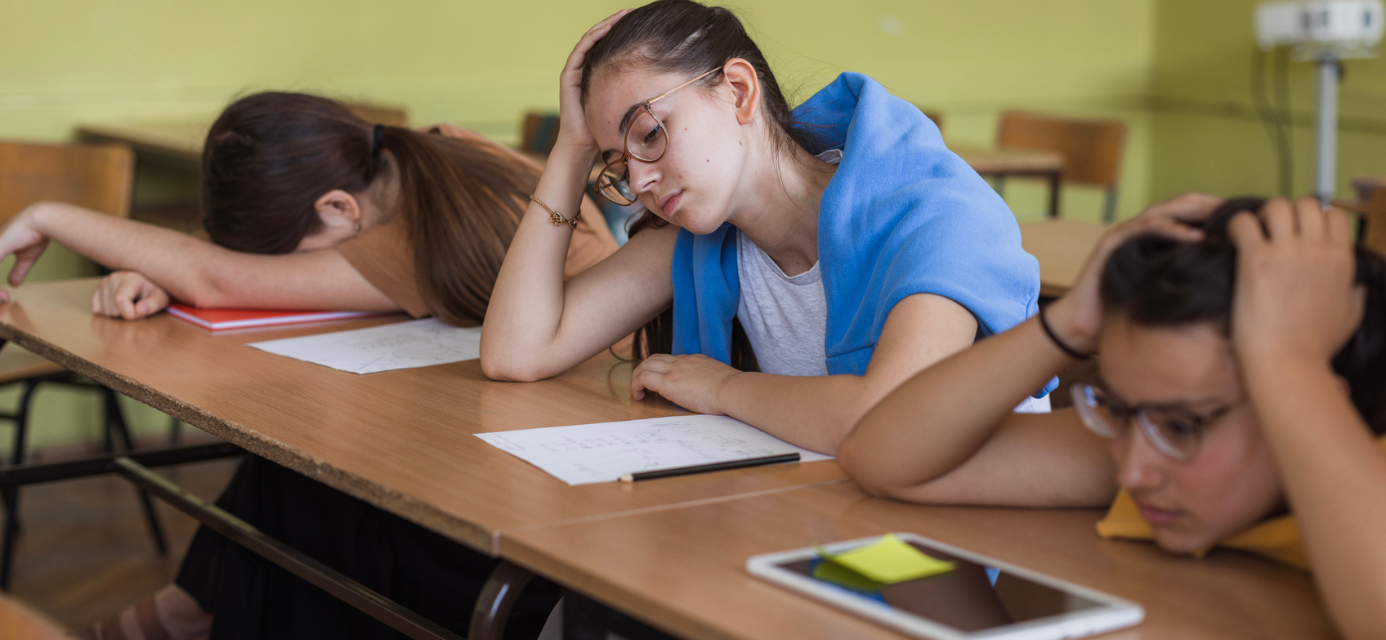
Getting your teenager out the door for school can feel like a daily battle. Many parents watch their teen stumble through the morning exhausted, struggle to stay awake in class, or become increasingly irritable and withdrawn during the school year. It’s easy to assume they’re staying up too late or simply need better habits, but the reality is more complicated.
During adolescence, biological changes often shift the body’s sleep schedule later, and external stressors ramp up. That means many teens aren’t able to fall asleep in time to get the proper sleep they need before an early school start. After a while, that sleep loss can affect mood, learning, emotional regulation, and overall mental health.
What You’ll Learn
- What’s the impact of early school start times on teen mental health?
- What are some ways teens can improve sleep?
- Are later start times better for mental health?
- When do you know if your child needs additional support for mental health?
Quick Read
Early school mornings can significantly impact teen mental health. Adolescents naturally experience a shift in their sleep patterns during puberty, making it difficult for them to fall asleep early enough to meet the recommended eight to ten hours of sleep. As a result, many teens face chronic sleep deprivation, which can lead to mood issues, lower academic performance, and emotional regulation difficulties.
The American Academy of Pediatrics advocates for later school start times to help combat these challenges, as research shows that teens benefit from increased sleep and improved mental health when schools begin later.
To support better sleep hygiene, families can implement consistent sleep schedules, limit screen time before bed, and avoid overscheduling activities. While later school start times can help, they are not a complete solution. Persistent sleep issues combined with mood changes may indicate deeper mental health concerns, requiring professional evaluation and treatment. Newport Academy offers tailored care for teens struggling with sleep deprivation and related mental health issues, emphasizing collaboration with families and schools to foster healthier outcomes.
Questions?
We know that reaching out can be difficult.
Our compassionate team of experts is here to help.
Call us at 877-929-5105
or complete the form below.
The Impact of an Early School Start Time on Adolescent Mental Health
During puberty, high-school aged adolescents experience a natural shift in their circadian rhythm that makes them feel sleepy later at night and wake later in the morning. They may seem to go from being a morning person to being a night person seemingly …. well, overnight. Even when they try to go to bed earlier, many adolescents can’t fall asleep before 11:00 pm because melatonin is released later in teens than it is in children or adults.
When schools start before 8:30 am, many young people have to wake up before their bodies are ready. As a result, they often get less than the recommended eight to 10 hours of sleep. That’s why the American Academy of Pediatrics and the Centers for Disease Control and Prevention recommend later middle and high school start times; chronic sleep deprivation is linked to poorer mood, lower academic performance, and worse physical health.
Sleep loss also dramatically impacts emotional regulation. Teens who don’t get enough sleep are more likely to experience anxiety, depression, irritability, difficulty concentrating, and risk-taking behaviors. And adolescents who are already coping with anxiety, depression, ADHD, bullying, learning differences, trauma histories, or other mental health concerns are more vulnerable to the effects of chronic sleep deprivation.

Should High School Start Later?
Research on sleep and teen mental health consistently finds that when schools start later, adolescents get more sleep and experience better physical and mental health outcomes. Of course, knowing teen mental health would benefit from later start times doesn’t mean your school district will implement later start times.
However, it’s worth knowing the facts so you can better understand your teen, seek out other parents dealing with the same issues, and potentially work with your local PTA or school district to seek policy change.
Why Later School Start Times Are Good for Adolescent Health
Here are four reasons later start times can help:
1. Insufficient sleep
Teens aren’t getting enough sleep. Approximately 75 percent of adolescents get less than 8 hours of sleep on school nights, and the percentage of high school students who aren’t getting enough sleep increased from 69 percent to 77 percent between 2009 and 2021. Certain groups, like girls, Black students, and 12th-graders, have the highest risk of getting poor sleep.
As awareness has grown, some states have begun changing school schedules. California, for example, enacted a law in 2022 requiring middle schools to start no earlier than 8:00 am and high schools no earlier than 8:30 am.
2. More daytime alertness
Later school start times are linked to improved alertness, mood, attendance, and academic performance, according to the National Sleep Foundation. In one study, delaying school start times increased sleep duration by 25–77 minutes per school night.
In Fairfax County, Virginia, delaying school by 50 minutes was associated with 5 percent fewer students reporting low mood and 8 percent fewer reporting drowsy driving. Teachers also observed improved daytime alertness among students, enhancing daily functioning and supporting academic benefits during the school day.
3. Improved daytime functioning
Schools starting after 8:30 am see improved academic benefits, including better attendance, reduced tardiness, and higher test scores. A study of more than 46,000 students found that one-third of students attending schools with start times of 8:30 am or later got at least eight hours of sleep, compared with only one-quarter of students attending schools that started before 8:00 am.
4. Better mental health
Research suggests that later school start times affect mental health outcomes. Studies show that later start times are linked with lower rates of adolescent depression, anxiety, and suicidality.
However, later start times, while helpful, aren’t a cure-all solution. Factors such as after-school jobs, extracurricular activities, transportation schedules, and family responsibilities can still limit how much additional sleep teens actually get. Even so, later school schedules remain one of the most effective population-level strategies for improving adolescent sleep and well-being.
How to Improve Sleep on Weeknights
Even with early school start times, families can build good baseline sleep hygiene habits at home. Here are sleep-focused interventions that support teen sleep health:
1. Create a consistent schedule
To improve daily sleep hygiene, keep bedtimes and wake times within 30 minutes of each other throughout the school week and also on weekends, to help stabilize circadian rhythms.
2. Set phone and screen limits
Have everyone in the family turn off phones, tablets, and laptops at least one hour before bedtime to ensure they don’t disrupt sleep-related processes. Blue light suppresses melatonin and can delay sleep onset and lead to compromised sleep quality. Social media use and academic pressure also impact teen mental health alongside sleep deprivation.
3. Establish teen curfews
Curfews keep teens from staying out too late and can help them stick to a more regular routine, supporting increased sleep duration and healthy functioning.
4. Limit activities
Be careful about overscheduling. Extracurricular activities and after-school jobs are valuable parts of teen life, but too many activities crammed into a schedule can contribute to anxiety, depression, or chronic sleep deprivation.
5. Track sleep patterns
One of the most important sleep hygiene focused interventions is simply keep track of sleep schedules. Encourage your teen to use a sleep diary or app for one to two weeks to identify bedtime routines, wake times, and how rested your teen feels each day.
6. Make gradual changes
Shifting homework time and wind-down time earlier by even 15 minutes can support more relaxing nighttime routines, helping teens fall asleep early and get more sleep.
Healthy sleep habits can reduce some of the effects of early school mornings. However, for teens with anxiety, depression, ADHD, or other mental health concerns, lifestyle changes may not be enough on their own.
Signs Your Adolescent Needs Support for Sleep and Mental Health
Persistent sleep problems paired with mood or behavior changes can signal adolescent mental health concerns beyond normal high school stress or developmental transitions.
Watch for the following red flags in your teen for depression or anxiety with sleep deprivation:
- Your teen won’t get out of bed
- They’re chronically exhausted, even when they’re getting 8-10 hours of sleep at night
- They struggle to stay awake in class
- Grades are dropping
- They’re unable to complete homework assignments
- Previously enjoyed activities don’t interest them anymore
- They get easily and frequently overwhelmed
- They seem persistently low, hopeless, or irritable
- It takes more than 45–60 minutes to fall asleep most nights
- Racing thoughts at bedtime prevent them from being able to relax
- They wake up a lot at night or have nightmares
- They experience panic symptoms or dread about school the next day
If severe sleep disturbance, anxiety, or depression continues for several weeks despite healthy sleep habits and family support, a professional evaluation can help you figure out what to do next.
Treatment for Teens Affected by Early School Mornings
Ongoing sleep deprivation combined with academic pressure and other stressors can contribute to depression, anxiety, or co-occurring mental health conditions that often require structured treatment.
In therapy, multiple approaches and levels of care exist to meet your family where you are. Depending on symptom severity and length, these can include:
- Residential treatment, which provides 24/7 stability, support, and academics for teens with severe symptoms or safety concerns
- Partial Hospitalization Programs—full-day outpatient programs that allow students to live at home while receiving treatment
- Intensive Outpatient Programs—partial-day programs for teens who continue to attend their usual school
- Outpatient therapy with evidence-based modalities, including Cognitive Behavioral Therapy (CBT), Dialectical Behavior Therapy (DBT), and EMDR, to address anxiety, trauma, insomnia, and emotional regulation
- Family therapy to reinforce healthy sleep habits and support recovery at home
- Temporary school schedule modifications while teens stabilize their mental health
- School counseling or peer support
Newport Academy Care for Teen Sleep and Mental Health Issues
Newport Academy provides a full continuum of care for teens experiencing sleep deprivation, anxiety, depression, and other mental health conditions worsened by early school schedules. Treatment plans are individualized based on symptom severity, family circumstances, and school demands.
Clinicians also collaborate with pediatricians, school counselors, and school districts when accommodations or schedule adjustments are needed. The intake process includes a confidential consultation, screening, review of sleep history, and recommendations for the most appropriate level of care.
If you’re worried about your teen’s sleep, mood, or safety, Newport Academy can help you understand your options. Get in touch to see how to take your next right steps.
Frequently Asked Questions
Most adolescents need eight to 10 hours of sleep each night to support healthy brain development, emotional regulation, and overall well-being.
Focus on consistent sleep routines, limiting screens before bed, and protecting school nights from excessive activities. These habits won’t make the effects of early mornings disappear, but they can improve sleep quality.
Not necessarily. Later start times make adequate sleep more achievable, but technology use, stress, extracurriculars, commitments, and family schedules still influence how much sleep teens get.
Yes. Teens with anxiety, depression, ADHD, learning differences, trauma histories, or other mental health concerns are often more vulnerable to the effects of chronic sleep deprivation.
If your child’s anxiety is persistent, interferes with their daily life, or leads to significant distress, it may be time to consult a mental health professional. Early intervention can provide valuable support and coping strategies.
Seek a professional evaluation and explore behavioral health options if your teen remains chronically sleep deprived despite healthy sleep habits or begins showing signs of anxiety, depression, self-harm, or significant changes in mood, behavior, or academic performance.
Sources
American Academy of Pediatrics
Curr Sleep Med Rep. 2018 Apr 21;4(2):110–117.
CDC