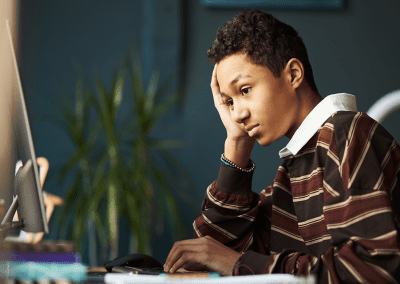
Being a teenager is stressful. And, having a teenage child is stressful. Rapid physical changes, awakening sexuality, the urge for autonomy, and questions of identity are consuming their thoughts. At the same time, they are expected to keep their grades up, finish homework, make it to practice on time, and help with household chores.
Juggling all of these expectations, while good for character and growth, can cause worry, anxiety, and stress in adolescents. And, if teens lack the coping skills necessary to manage stressful situations, their stress can present itself as anger, avoidance, and denial. Helping your teen learn positive coping mechanisms will set them up for success now and into the future.
Key Takeaways
- Recent data shows that 1 in 5 adolescents exhibit signs of anxiety or depression.
- When teens don’t have healthy coping strategies, they may distract, avoid, or self-medicate their distress.
- There are five main types of coping skills: problem-focused strategies, emotion-focused strategies, meaning making, social support, and religious coping.
- Teens need more than coping skills if they have a mental health condition that requires treatment, such as depression, anxiety, or PTSD.
What Causes Stress and Anxiety in Adolescents?
Adults are no strangers to stress and anxiety. Balancing family, work, finances, and time for yourself can be challenging. It may be surprising to think that your child could be feeling some of this stress, too. But research indicates mental health issues among adolescents has been a growing concern.
The American Academy of Pediatrics issued the National State of Emergency in Child and Adolescent Mental Health in 2021, followed by advisories from the U.S. Surgeon General in 2021 and 2023. Experts point to COVID-19, racial injustices, and more recently, increased social media use, as major contributors to rise in adverse mental health conditions in adolescents.
An analysis of data released by Teen National Health Interview Survey revealed 1 in 5 adolescents showed symptoms of anxiety or depression. Young girls were more than twice as likely than their male peers to experience anxiety (31 percent vs. 12 percent) and depression (25 percent vs. 10 percent). Furthermore, these rates were significantly higher in LBGTQ+ adolescents, with percent 43 percent having symptoms of anxiety and 37 percent showing signs of depression.
Other findings from the analysis include:
- Screen time: 92 percent of adolescents were engaged in two hours of daily screen time that was unrelated to homework. Research shows social media use is linked with poor well-being among young people, and a higher risk of depression for girls.
- Adverse experiences: Adolescents reported bullying (34 percent), emotional abuse by a parent (17 percent), and neighborhood violence (15 percent).
Signs a Teen Is Feeling Stressed
How do teens react to stress, particularly when they don’t have strong coping strategies? Signs of stress in teens can include:
- Feeling anxious or nervous
- Stomachaches and chest pain
- Sudden changes in behavior
- Procrastinating or neglecting responsibilities
- Moodiness, lashing out
- Having negative thoughts
- Withdrawing from family and friends
- Difficulty sleeping or sleeping too much
- Problems remembering, focusing, and concentrating
- Excessive substance use
- Unexplained physical symptoms
Top 10 Teen Stressors
Why are coping skills for teens so important? Because teens have a lot of challenges to deal with that are much different than other generations had to face. Social media use is negatively impacting mental health by constructing certain social and cultural “norms” teens feel they need to live up to, such as the “ideal” body. Additionally, online activity opens the door to cyberbulling, which can cause tremendous adolescent stress.
Questions?
We know that reaching out can be difficult.
Our compassionate team of experts is here to help.
Call us at 877-929-5105
or complete the form below.
An EdWeek Research Center Survey asked teens to identify the top issues that had a negative impact on their mental health. The top 10 sources of stress were:
- Homework, grades, and test scores
- Concerns about physical appearance
- Societal issues/news
- Worrying about how they are perceived by others
- Peer pressure and friend relationships
- Substance use, both their own and their friends’
- Dating and relationships
- Family stressors, such as divorce and adjusting to a blended family
- Bullying, both online and in person
- Worries about not being able to pay for college
“The challenges today’s generation of young people face are unprecedented and uniquely hard to navigate. And the effect these challenges have had on their mental health is devastating. The COVID-19 pandemic exacerbated the unprecedented stresses young people already faced.”
US Surgeon General Dr. Vivek Murthy
What Are Unhealthy Coping Strategies for Adolescents?
When a situation feels painful or overwhelming, and teens don’t have the proper skills they need, they may default to unhealthy coping mechanisms. Consequently, they may make risky or self-destructive choices to distract themselves from their distress or to ease the intensity of their emotions.
The most common unhealthy coping skills for teens include:
- Avoidance—attempting to avoid a stressful situation rather than face the issue
- Misdirected anger—using rage or aggression to mask sadness or release other difficult emotions
- Social media overuse—to distract from painful feelings
- Substance use—as self-medication for anxiety, trauma, or depression
- Self-harm—as a way to release feelings of pain, tension, and anxiety
- Disordered eating—as a form of self-control when teens feel out of control
- Impulsive spending (retail therapy)
Substance Use as Self-Medication for Stress
New research by the Centers for Disease Control and Prevention shows that teens are self-medicating with drugs and alcohol for mental, emotional, and physical relief. The study of 15,963 teens ages 13-18 being assessed for substance use disorder treatment showed that 73 percent use substances to “feel mellow, calm, or relaxed,” and 50 percent said they use them to have fun or experiment.
In addition, 44 percent of teens admitted to using drugs to help them “to stop worrying about a problem or to forget bad memories.” The report also found that 40 percent take drugs to cope with depression or anxiety. According to the report, the findings indicate that “reducing stress and promoting mental health among adolescents might lessen motivations for substance use.”
Parents: Remember the Why
When teens are using these unhealthy coping skills for adolescent stress, you can find it helpful to remember why they are acting out in these ways. These behaviors are not designed to annoy parents. Rather, teens are resorting to poor coping skills because they are in pain.
Giving them a list of coping skills for teens may not avert the unhealthy behavior every time. But it provides other choices that they can turn to when they’re struggling. The more they practice healthy coping skills, the more they see how effective and positive these tools can be.

5 Coping Skills for Teens and Adolescents
While there are a variety of models of coping, researchers generally recognize five types of coping skills. The most effective strategies generally help a person approach rather than avoid the source of their stress. However, there are exceptions. And even healthy coping strategies taken to an extreme can be harmful.
Here are the five types of healthy coping skills, and coping strategies for each category that teens can try.
Problem-Focused Coping
Taking direct action to solve a problem is often the fastest way to reduce stress. This works best when teens are dealing with a specific and solvable problem or situation, rather than unfocused anxiety and stress. Problem-focused coping strategies include:
- Seek out as much information as possible about the situation, including the people who can support you in finding a solution
- Break the problem down into manageable chunks, and addressing them one step at a time
Emotion-Focused Coping
Stress is not just a function of what’s happening to us or around us. It is also the result of what’s happening inside us. How teens react to their thoughts and feelings plays a major role in whether or not they experience a situation as stressful. Here are two emotion-focused coping skills for teens to help them manage their emotional response:
- Practice breathing and relaxation practices, which automatically regulate the nervous system and create a sense of calm
- Try creative expression, such as art, music, or dance, which helps teens process emotions in positive and productive ways
Social Support
Turning to others who can help solve a problem is one of the most helpful coping skills for teens. It’s a boost for the emotions and can also help alleviate a specific stressor. Research shows that girls tend to use the social support strategy more naturally than boys, who are more inclined to use avoidant strategies. Social support strategies include:
- Connect with a close friend who makes you feel loved for who you really are
- Reach out to a parent or other trusted adult, such as a coach or school guidance counselor
Meaning Making
Meaning-making strategies help change the way teens view a situation. Trying to see the positive or meaningful aspects of a difficult situation can change the way we feel about it. Teens can try these meaning-making coping strategies:
- Reframe negative thoughts to shift your mindset, so you can see a situation, person, or relationship from a healthier point of view
- Journal to put your feelings in perspective and make sense of what you’re going through as part of your larger story

Religious Coping
For many people, faith traditions can support healthy coping by providing social and emotional support and a sense of meaning. This form of coping does not have to involve an organized religion.
- Spending time in nature inspires a sense of awe and gratitude, and reminds teens that they’re part of something bigger than themselves.
- Volunteering connects teens to their larger community. It’s also proven to lower stress and promote overall health and well-being.
Mental Health Treatment When Teen Coping Skills Aren’t Enough
While coping skills for teens are essential, they aren’t sufficient when a teen is struggling with a mental health condition. In those cases, coping strategies for adolescent stress need to be part of a larger treatment plan. Depending on the needs of the teen and family, that might include weekly therapy, outpatient care, or a teen residential center.
At Newport Academy, teens’ daily schedules include multiple opportunities to learn and practice coping skills for navigating stressful situations and difficult emotions. Meanwhile, in group, individual, and family therapy, they heal the underlying issues catalyzing their mental health concerns. During their time with us, teens begin to love and accept themselves, while building stronger relationships with family and with peers.
Contact us today to learn more about our clinical model and our specialized treatment for adolescents.
Frequently Asked Questions
Sources
MMWR Morb Mortal Wkly Rep 2024; 73: 93–98.
KFF Survey Feb 2024
Education Week 2023 Report
BMC Public Health. 2018; 18: 8.
Eur J Health Psychol. 2018; 25(1): 18–30.
J Genet Psychol. 2016 May–Jun; 177(3): 85–96.
Psychol Aesthet Creat Arts. 2010; 4(4): 247–253.