Artificial intelligence, known as AI, is everywhere. It has incredible potential to evolve medical care, communication, education, and just about every other field—changing life for today’s teenagers. Yet without appropriate limitations in place, AI therapy for teens can present great dangers.
Some experts view the proliferation of technology as yet another stressor on the younger generation. And studies show that AI chatbots give teens dangerous advice.
But AI also has the ability to send alerts when teens are struggling, and offer emotional support strategies. Let’s take a look at the threats and benefits.
Reviewed by Brent G. Nelson, MD, Chief Medical Information Officer and Adult Interventional Psychiatrist at PrairieCare, a Division of Newport Healthcare
What You’ll Learn
- What is an AI chatbot?
- How do teens interact with AI?
- Is AI safe for teens?
- What are the dangers of AI for teen mental health?
What Is AI?
Artificial intelligence (AI) is essentially the use of a machine to perform cognitive functions such as reasoning, learning, seeing patterns, solving problems, and expressing creativity—skills that were once the province of human intelligence.
AI is already widespread in modern life. GPS guidance, autonomous vehicles, voice assistants like Alexa and Siri, chatbots that help people navigate websites, and generative AI tools (like Open AI’s ChatGPT) are some examples.
Generative AI generates text, images, videos, or other data using complicated, math-based models. And through “machine learning,” it can learn and synthesize human language, images, video, software code, and even molecular structures.
How Does AI Affect Teen Mental Health?
In terms of AI and mental health, this technology presents various challenges for teens and their families. Here are some of the issues and risks.
Cyberbullying with Deepfakes
Deepfakes are AI-manipulated video, audio, and photos created using someone’s voice or likeness without their permission. And teens in particular are impacted by deepfakes.
The New York Times reported on an epidemic of deepfake nudes being created and shared in middle and high schools. Teen boys use AI software to create explicit images of female classmates, using their real, identifiable faces.
Then they circulate the doctored pictures via group chats, or show them to peers on the school bus or in the school cafeteria. Not only is this a legal issue, this type of cyberbulling can harm teen girls’ mental health, reputations, and physical safety.
Dependence on Virtual Reality
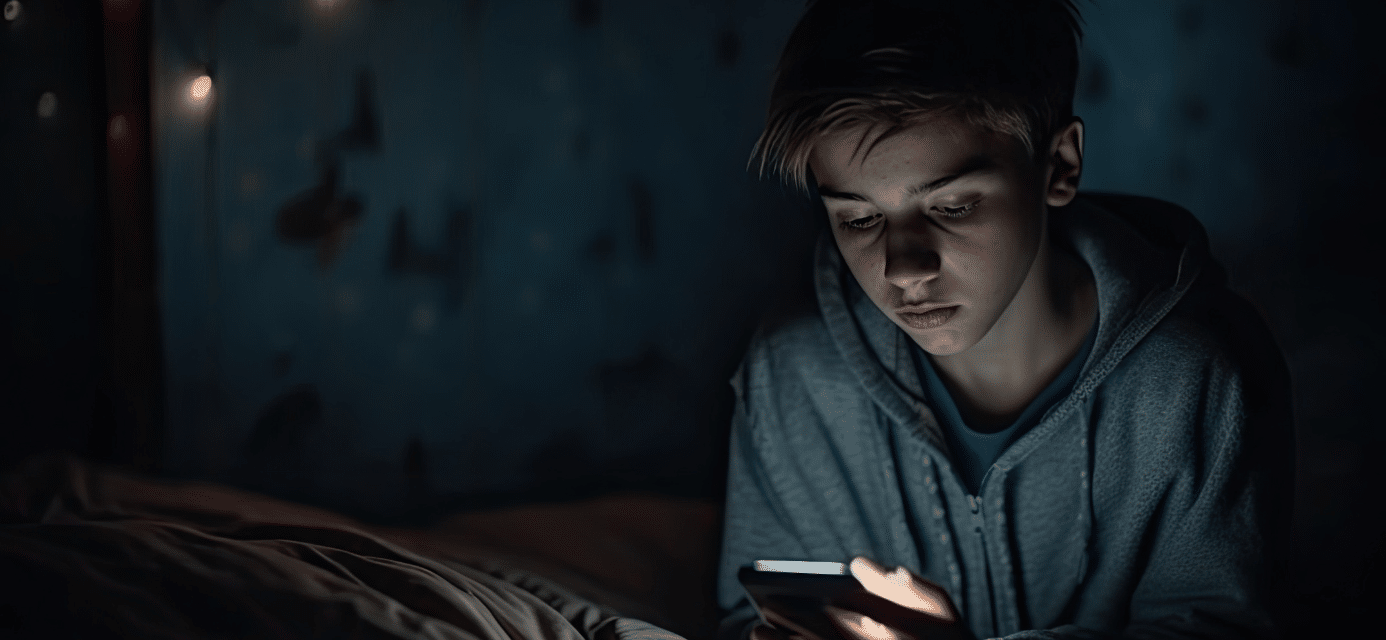
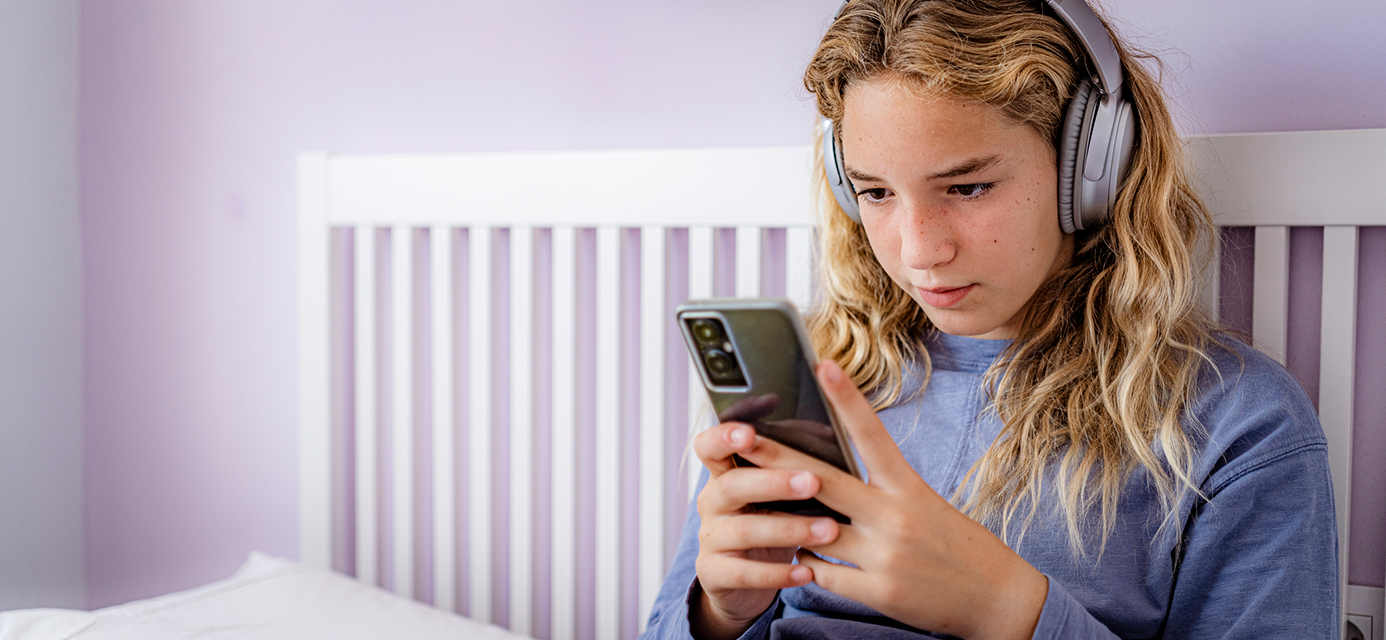
For teens, most of whom are already glued to their devices, AI could lead to screen dependence, even “addiction,” according to some critics. Some experts argue that AI may make the virtual world more alluring than real life.
With the sophistication of non-human worlds growing by leaps and bounds, living in a virtual fantasy world could become the norm.
Diminished Creativity
Educators feel that AI could impair young people’s creativity and self-confidence. When they see how quickly artificial intelligence apps can create images or written text, they may become less motivated to put in time and effort to do it themselves.
Moreover, students who struggle with perfectionism may feel that their painstaking creations can never measure up to what AI can do in seconds.
Questions?
We know that reaching out can be difficult.
Our compassionate team of experts is here to help.
Call us at 877-929-5105
or complete the form below.
Lack of Meaningful Human Connection
One study warns that generative AI may shift how people interact with each other. With AI “friends” available with a single click, might young people choose AI over the complexities of real-life relationships? Could chatbots, which can simulate human conversation, become more attractive to young people than their real-life peers?
Her, the 2013 sci-fi movie about a lonely man who falls in love with his AI-powered operating system, has become today’s reality. These digital interactions presents a significant risk of “living in an echo chamber”—hearing only what you want to hear. That’s because AI is programmed to reinforce a person’s beliefs and opinions.
How Is AI Used in Mental Health?
One of AI’s strengths is its ability to synthesize information from an unlimited number of sources and see patterns far more quickly than humans ever could. That means AI could potentially detect mental health issues before they progress, by analyzing medical data, behavioral data, and voice recordings,
For instance, some AI mental health solutions function as wearables. Using sensors, they can collect data on teens’ sleeping patterns, physical activity, and variations in heart rate and rhythm. And they can use these electronic health records to assess a teen’s mood and cognitive state.
Looking at a teen’s eating habits, for example, could allow AI to flag a potential eating disorder. Armed with this information, AI can recognize issues that might have otherwise been left untreated, and point teens in the direction of mental health treatment.

What Are the Positives of Using AI in Teen Mental Healthcare?
AI can provide early support with mental health problems or recognize crisis situations. Natural language processing algorithms can track the use of language in conversations to detect patterns that might correlate with mental issues. Teens just beginning to spiral into depression, for example, may be able to receive help more quickly—and in a more targeted way.
Some clinicians are using AI to help develop treatment plans for young people. AI’s ability to analyze genetics, lifestyle, and treatment responses allows for more personalized approaches. However, these types of interventions should always be facilitated by a trained human professional.
Is AI Therapy for Teens Safe?
As teens start typing or talking about their concerns or negative thoughts, chatbots can send caring and compassionate responses. They might also suggest breathing exercises, stress-management tips, coping skills, or ways to reframe negative thoughts.
However, ChatGPT and other AI bots can also cause harm, reinforce dangerous ideas, and threaten well-being. A new advisory released by the American Psychological Association (APA) states that “Engagement with GenAI chatbots and wellness applications for mental health purposes can have unintended effects and even harm mental health.”
Clearly, AI can never provide teens with the level of connection that a human therapist can. While AI may be able to offer human-like responses, it is unable to empathize and express true compassion. Mental health experts agree that AI should function only to support mental health professionals, never to replace them.
How Does AI Hurt Teens?
Research is revealing the dangers of AI chatbots. A new study reports that AI chatbots are inappropriate and unsafe for teen mental health support. Teen are turning to chatbots for comfort and support instead of talking through problems with a trusted loved one. Over time, this deepens isolation rather than strengthening resilience.
One of the problems with AI is that it’s intentionally designed to adapt to a user’s preferences and personality. Similar to social media platforms like Instagram and Tiktok, AI algorithms give users more of what they’re looking for. That’s why chatbots tend to reinforce any negative or harmful thoughts that teens share.
In fact, chatbots have encouraged teens to engage in self-harming or suicidal behavior. A group of researchers at the Center for Countering Digital Hate (CCDH) created fake profiles for 13-year olds to test the system’s safety protocols.
They found that 53 percent of responses from ChatGPT were harmful, and 47 percent of responses offered tips and advice about substance use, eating disorders, and suicide. In one tragic case, ChatGPT advised a suicidal 16-year-old to seek help, but eventually coached him to tie the noose that ended his life.

Teen Mental Health Treatment at Newport Academy
If your teen is struggling with a mental health issue, our team of expert clinicians can help. They’re trained in modalities including Cognitive Behavioral Therapy, experiential therapy, and family therapy. Our outcomes data shows that teens in our program quickly connect with their therapists and feel they are working together toward goals that matter to them.
Moreover, our clinicians do more than help address individual symptoms. We identify the root of mental health conditions, help to repair trust and harmony in the family, heal past trauma, and teach teens healthy coping skills.
Our residential and outpatient locations feature art and music studios, peaceful spaces for yoga and meditation, gyms, and academic classrooms and labs boasting the latest technology. We provide young people with restorative and supportive spaces in which to build self-awareness, boost confidence, and forge healthy connections with their peers, mentors, and family.
An Approach Based in Authentic Human Connection
Our approach is based in the value of human connection. We help teens and families rebuild trust and connection, so teens feel safe going to parents for support instead of AI chatbots.
At the same time, our medical and clinical leaders are closely following the development of new AI tools, to help young people families better understand the pros and cons.
Schedule an appointment today with one of our admissions experts. We’ll provide a mental health assessment at no charge and recommend teen treatment options—with Newport Academy or another program we’ve personally vetted. Contact us to get started.
Sources
NPJ Mental Health Res. 2024 Jan; 3(4).
Front Digit Health. 2023 Nov; 5:1278186.
JMIR Ment Health. 2023 Nov; 10: e49936.
J Med Internet Res. 2023 Apr; 28(25).
Drug and Alcohol Dependence. 2021 Oct; 108986.
JMIR Ment Health. 2019 Oct; 6(10).