


An increasing number of younger children need intensive mental health support, but it’s difficult to find high-quality residential treatment for this age group. Newport Academy is addressing this gap in care by expanding our programming to offer safe, effective, and compassionate residential care for ages 7–11.
Our integrated approach addresses anxiety, depression, and other childhood mental health disorders through age-appropriate care that emphasizes evidence-based modalities, family involvement, and unconditional love. Parents stay connected with their child and the care team throughout their time with us.
Need care for different ages? Newport also offers residential treatment for teens (ages 12-18) and residential care for adults (18-35).
Questions?
We know that reaching out can be difficult. Our compassionate team of experts is here to help. Call us at 877-929-5105 or complete the form below.
What Does Residential Treatment for a Children Include?
Residential treatment centers are live-in healthcare facilities that provide a stable, structured environment and a variety of therapeutic activities. A residential schedule for pre-teens includes clinical care, individual and family therapy, experiential activities, and academics.
While in residential treatment, children live in a comfortable, home-like setting and are supervised by trained care staff who are with them throughout the day. Their treatment experts also include psychiatrists, therapists, nurses, registered dietitians, academic teachers, and more.
Our approach is tailored to meet the developmental stage of the client and specific needs of the family, and includes:
- A focus on family involvement, through family therapy and programming
- Regular progress updates from the therapist
- Daily communication with parents
- Weekly visitation, and more often when clinically appropriate
- Highly structured and supervised environment
- Staff and therapist team trained in working with children
- Experiential modalities, including art, music, and yoga therapy
- Coordinated logistical travel and transition support for families and loved ones
Your children’s individualized treatment plan will include the following:
At Newport Institute, we use a wide range of evidence-based modalities in individual therapy with children, including:
- Cognitive Behavioral Therapy (CBT)
- Dialectical Behavioral Therapy (DBT)–informed skills
- Eye Movement Desensitization and Reprocessing (EMDR)
- Motivational Interviewing
- Relational Trauma Repair
Our clinicians also integrate other modalities into each resident’s treatment plan, including experiential therapy, mindfulness practice, and other techniques targeted to each individual’s specific needs.

Newport Academy’s Care Team
Upon admission to our child and pre-teen residential treatment center, each client is assigned a care team that develops a personalized program to ensure positive growth and sustainable healing. Care teams meet daily to review and discuss treatment plans and individuals’ progress. Each client’s tailored treatment plan may include a variety of evidence-based and empirically supported modalities, ranging from play therapy to art therapy to Cognitive Behavioral Therapy.
Team members collaborate closely to optimize each child’s therapeutic growth track as they recover from mental health disorders. Moreover, parents/guardians receive updates from the care team at least twice a week, with details on their child’s progress and goals.
Your kid’s care team is responsible for developing a personalized program to ensure positive growth and sustainable healing. The care team may include some or all of the following:
Clinical Director
PsyChiatrist
Therapists
Medical Doctors
Registered Nurse
Registered Dietitian
Family Therapy at Newport
Our treatment for children utilizes Newport’s primary family therapy model, Attachment-Based Family Therapy, when age-appropriate. With younger clients, family therapy is informed by the Middle Childhood Attachment-Based Family Therapy model, a family systems approach.
Therapists engage parents/caregivers in parenting and emotion-coaching skills, as well as behavioral interventions, as needed. In addition, parents participate in support groups and psychoeducational presentations, facilitated by therapists and designed specifically for this age group.
Our Residential Locations


When Is Residential Treatment Needed for Your Child?
When a child is showing ongoing signs of depression, trauma, anxiety, distress, or defiance, they may need the support of a live-in pre-teen residential program. In some cases, residential treatment is the next step after a child has been in inpatient care in a hospital after a mental health crisis. However, residential care is also appropriate for children and pre-teens who have been in outpatient care or weekly therapy but need more support than these options provide.
Signs That a Child May Need Residential Treatment
- Defiant behaviors, such as yelling and hitting parents, teachers, siblings, and classmates
- Significant changes in eating and sleeping patterns
- Extreme worrying and sadness
- Talking about wanting to die or not wanting to exist anymore
- Self-harm, including cutting or hitting oneself, banging their head against something, or digging nails into skin
- Regressing to early childhood behaviors, such as bedwetting, baby talk, and temper tantrums
- Intense separation anxiety when away from parents
Research shows that residential programs for kids are an effective approach to treating childhood psychiatric disorders, including depression, anxiety, OCD, suicidal behavior, PTSD, and disordered eating.
How Newport Academy Is Changing Lives
Newport Academy provides a different kind of mental health treatment for children 7-11. From the moment your kid enters our doors, they are greeted with love and compassion. We don’t just treat your child’s symptoms, we work to uncover the underlying issues that have caused their mental health condition or self-destructive behavior.
And at Newport, we know that when your child is struggling, it impacts the entire family. Our therapists are trained in Attachment-Based Family Therapy, a core component of our treatment model. Through regular family therapy sessions we aim to repair damage in the family system and improve communication and connection. Your family will leave Newport with the tools to navigate any future challenge or conflict with grace and understanding.
Here are a few more reasons why Newport is the nation’s leading provider of youth residential treatment:
- We’re accredited by the Joint Commission, the nation’s oldest and largest healthcare accreditation body.
- We utilize the most successful evidence-based clinical models in the industry.
- Family involvement is essential. We ensure ongoing family communication about your child’s progress throughout treatment and maintain connection post-treatment with a robust alumni program.
- Our Center for Research and Innovation is dedicated to continuously improving patient outcomes, supporting professional development, and advancing the industry as a whole.
Newport Academy's Outcomes
Significant Improvements in Anxiety, Depression, and Well-Being
In 2024, Newport’s treatment yielded significant improvements in adolescent and young adult patients’ depressive and anxiety symptoms, subjective well-being, suicide risk, traumatic distress, and attachment to parents/caregivers.
Our care teams incorporate a wide variety of specializations—clinical, medical, psychiatric, experiential, dietary, life skills, and academic—to create transformative care experiences with exceptional results.
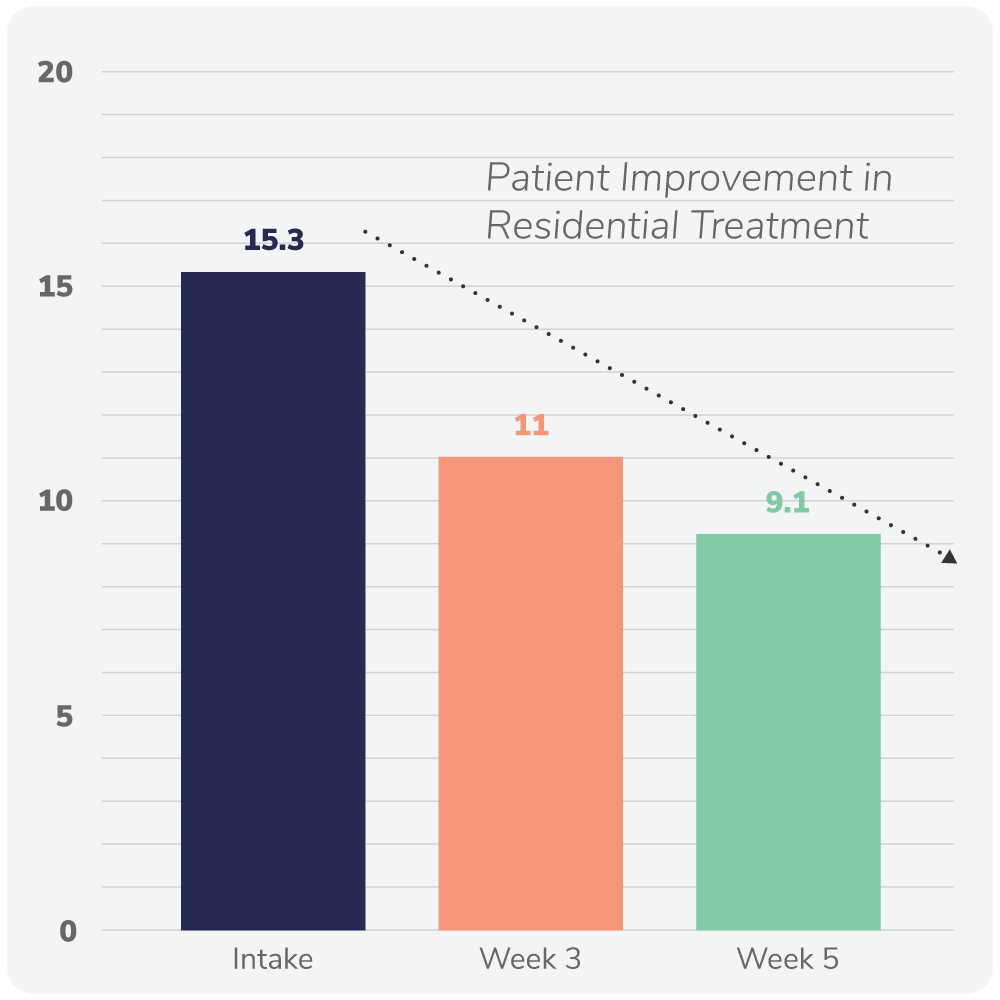
Anxiety outcomes in adolescent residential patients, as measured by the GAD-7.
Long-Term, Sustainable Results
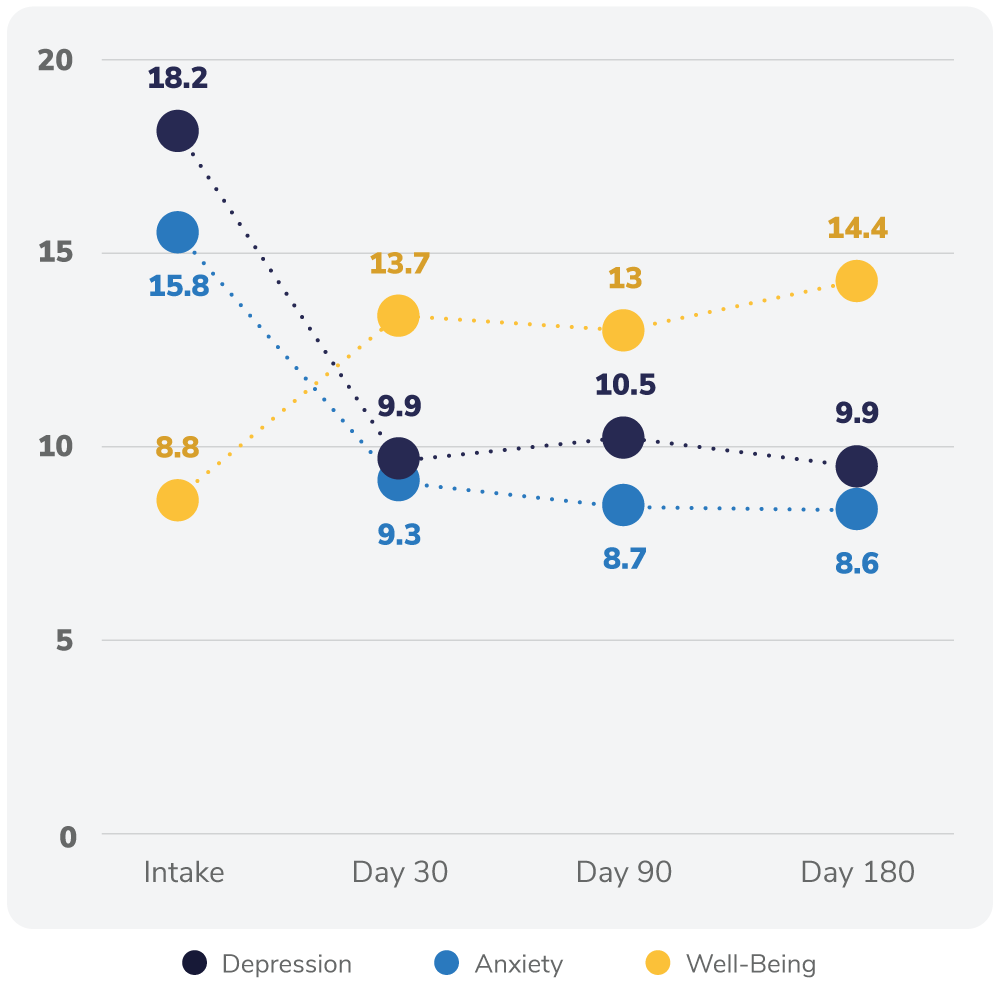
Post-discharge data shows that both teens and young adults maintained improvements, on average, after treatment, with all measures consistent or improved between day 30 and day 180. The data illustrates that the changes patients make within safe and caring therapeutic environments lead to long-term positive outcomes.
The chart shows young adult patients’ scores, on average, from intake through nine months after.
Take the Next Step
Our staff is here to guide you every step of the way, from the admissions process to navigating insurance and paying for care. Our admissions team is standing by, ready to help your family begin to heal.