



Newport Academy provides care for families across the country. Our teen residential treatment offers compassionate, evidence-based programming for adolescents who are struggling with depression, anxiety, substance use, eating disorders, and other mental health conditions.
We know that every teen’s and family’s story and struggle is different, so your child’s treatment plan will be tailored to meet your specific needs and treatment goals. And we’ll keep you updated and involved all along the way.
Listen Now:
Questions?
We know that reaching out can be difficult. Our compassionate team of experts is here to help. Call us at 877-929-5105 or complete the form below.
What Is Residential Treatment for Teens?
A Residential Treatment Center (RTC), also called a residential program or residential treatment facility, offers a safe, home-like environment where teens can step away from the pressures, triggers, and distractions of daily life. In this nurturing space, adolescents receive round-the-clock clinical care for mental health and co-occurring disorders, supported by psychiatrists, therapists, registered nurses, academic teachers, residential care staff, and more.
Quality teen residential treatment programs should combine evidence-based clinical therapy with academic support, experiential activities, and family involvement. This immersive, structured approach allows young people to focus fully on their healing journey, while also fostering reconnection, resilience, and growth for the entire family. Learn more about why residential treatment works for teens.
About Our Teen Residential Care

Age Range
Treating individuals
between the ages of 12 and 18

What We Treat
Mental health conditions
and co-occurring disorders

Length of Stay
Adolescents typically
stay between 30 and 60 days
When Is Residential Treatment Needed?
If your troubled teen is showing ongoing signs of depression, anxiety, distress, or defiance, they may benefit most from the full-spectrum mental health support of a live-in teen residential program. Newport’s internal data shows that residents who extend their stays beyond seven weeks show better outcomes and improved overall well-being.
If your teen has received inpatient care in a hospital for a mental health crisis, residential treatment could be the next step in their recovery. However, residential care (RTCs) for teens is also appropriate if your teen has been in outpatient care or weekly therapy but they need more support than these options provide.
How do you know if residential treatment is right for your teen?
Why Choose Newport Academy?
At Newport’s nationwide residential centers, your teen will be cared for by a multidisciplinary team of doctors, nurses, therapists, and other care staff who specialize in adolescent mental health. We treat teens of all ages, genders, and races, and are highly experienced in addressing the unique needs of LGBTQ+ teens.
Our residential housing is gender-separate to ensure your teen feels safe and comfortable while they focus on healing.
Through an integrated, whole-person approach, we addresses psychological, physical, relational, and educational needs of each teen.
Your child’s personalized treatment plan will include the following:
- Psychiatric care and medication management
- Individual and group clinical therapy
- Family therapy with parents/guardians
- Accredited academic instruction
- Experiential therapies, including adventure therapy, art, music, yoga, Mixed Martial Arts, and more (depending on location)
- Tranquil, healing environments


Family Involvement Is Essential to Treatment
We understand that when a teen is struggling, there likely ruptures in the family unit. Therefore, family involvement is core to our program. With regular ABFT sessions, our clinicians help improve parent-child communication and connection.
Here are just a few more reasons to choose Newport for residential treatment:
- We’re accredited by the Joint Commission, the nation’s oldest and largest healthcare accreditation body.
- We utilize the most successful evidence-based clinical models in the industry.
- Our robust alumni program helps teens and families stay connected post-treatment.
- Newport’s Center for Research and Innovation is dedicated to continuous improvement and successful patient outcomes.
%
of Professionals Would Refer Again
Clients Treated Last Year
%
Reduction in Depression After Care
Questions?
We know that reaching out can be difficult. Our compassionate team of experts is here to help. Call us at 877-929-5105 or complete the form below.
We work with most major insurance companies to optimize access to care for teens and families.
We know that treatment financing can make all the difference in making the decision to seek quality care at a youth treatment center. Newport Academy works with leading health insurance plans to support families in their efforts to access the most effective and compassionate adolescent mental healthcare.
Newport Academy’s Care Team
When your family is struggling, you need expert, compassionate care. The multidisciplinary team at Newport consists of board-certified psychiatrists, psychologists, and licensed therapists, many of whom have advanced degrees within the specializations of teen mental health, substance use, eating disorders, and more.
Your teen’s care providers are responsible for developing a personalized program to ensure positive growth and sustainable healing. The care team may include some or all of the following:
- Medical Doctors
- Psychiatrists
- Therapists
- Residential Care Staff
- Program Leadership
- Registered Nurses
- Registered Dietitians
- Academic Teachers
- Psychiatrists
- Therapists
- Residential Care Staff
- Medical Doctors
- Registered Nurses
- Registered Dietitians
- Academic Teachers
Our treatment experts are dedicated to ensuring the most successful outcomes for your child. The team conducts regular meetings to review and discuss your child’s treatment plan and individual progress, as well as share research and results to optimize each curriculum and therapeutic growth track. And as a parent, you are always aware of your child’s progress throughout their stay.
Where Are Newport’s Residential Programs for My Teen?
Our residential treatment facilities (RTCs) are located across the country and provide healing environments for adolescents to heal from severe mental health concerns.

Connecticut

Massachusetts
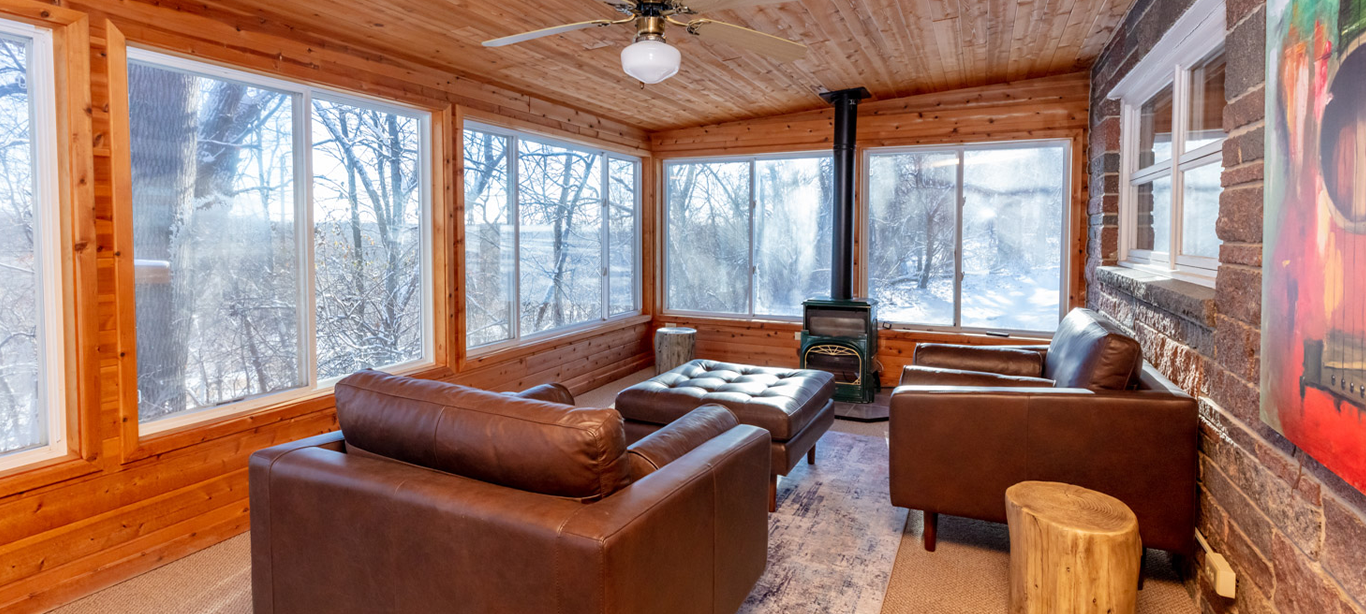
Minnesota
North Carolina

Northern California

Southern California

Utah
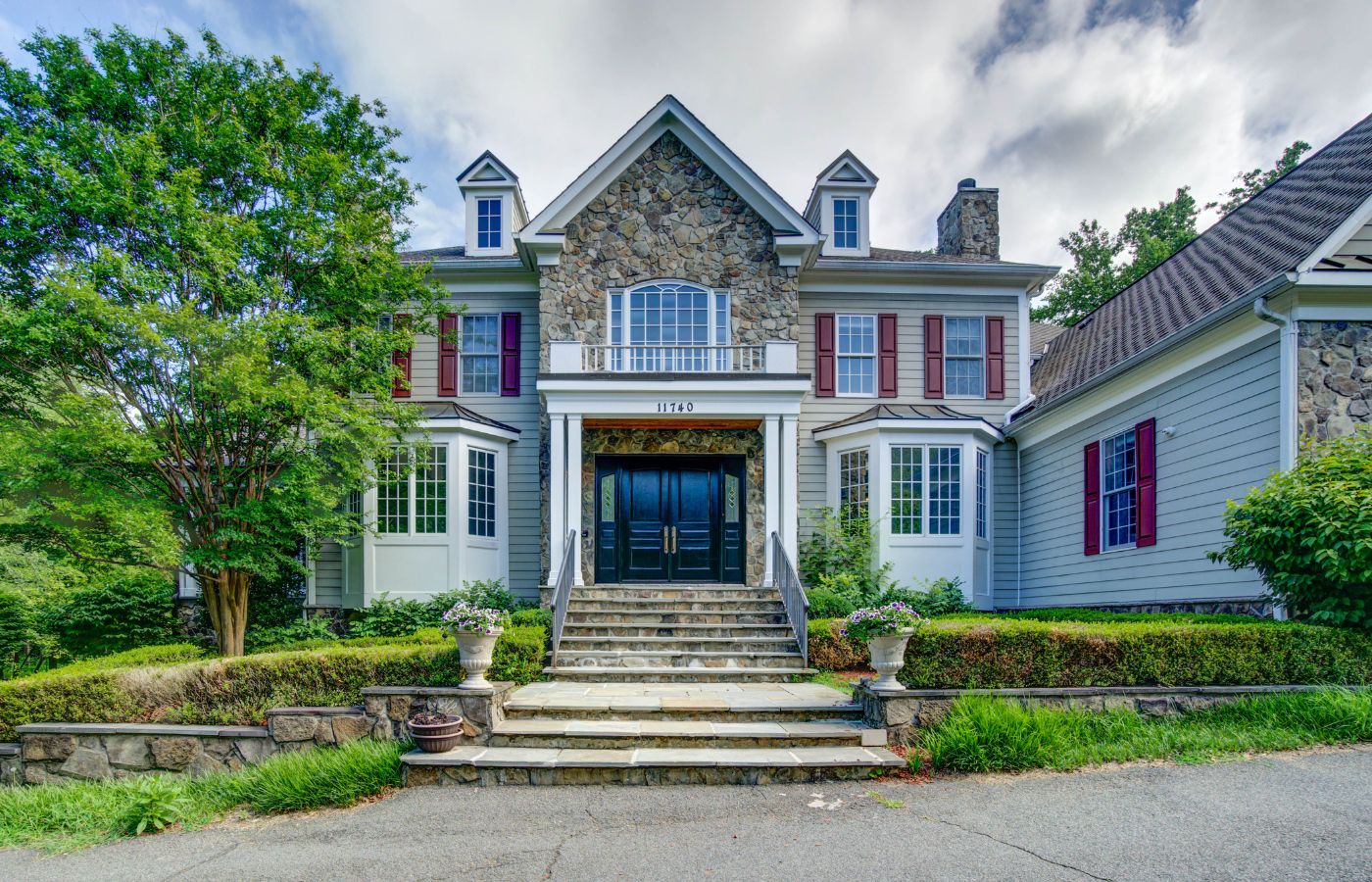
Virginia

Washington State
Images of Our Locations
What We Treat
We treat primary mental health conditions and co-occurring disorders, including:
- Depression
- Anxiety disorders
- Trauma and PTSD
- Bipolar disorder
- OCD
- Eating disorders
- Substance use
- Suicidal ideation
- Mood disorders
Psychosis
Our Therapeutic Modalities
Newport uses a results-driven treatment model, facilitated by clinicians trained and supervised in these evidence-based and empirically validated therapeutic modalities:
- Cognitive Behavioral Therapy
- Attachment-Based Family Therapy
- Emotional Freedom Technique
- EMDR (Eye Movement Desensitization and Reprocessing)
- Exposure and Response Prevention Therapy
- Acceptance and Commitment Therapy
- Motivational Interviewing
- Dialectical Behavioral Therapy
What Does a Day in Residential Treatment Look Like?
At Newport Academy, teens in residential treatment follow a structured daily routine that promotes healing and personal growth. Each day includes therapy, academic or life skills programming, and experiential activities that help build healthy relationships and emotional resilience.
| Time | Activities |
| 7:00–7:30 am | Wake Up, Shower, Breakfast |
| 7:30–8:00 am | Morning Intentions |
| 8:00 am–12:00 pm | Therapy Groups/Academics, Vocational or Life Skills Development |
| 12:00–12:30 pm | Lunch |
| 12:30–1:30 pm | Process-Oriented Group |
| 1:30–5:30 pm | Clinical Therapy |
| 5:30–6:00 pm | Dinner |
| 6:00–9:00 pm | Group Activities |
| 9:00–9:30 pm | Evening Reflections |
Our Outcomes Results
Significant Improvements in Anxiety, Depression, and Well-Being
In 2024, Newport’s treatment yielded remarkable improvements in adolescent and young adult patients’ depressive and anxiety symptoms, subjective well-being, suicide risk, traumatic distress, and attachment to parents/caregivers.
Our care teams incorporate a wide variety of specializations—clinical, medical, psychiatric, experiential, dietary, life skills, and academic—to create transformative care experiences with exceptional results.
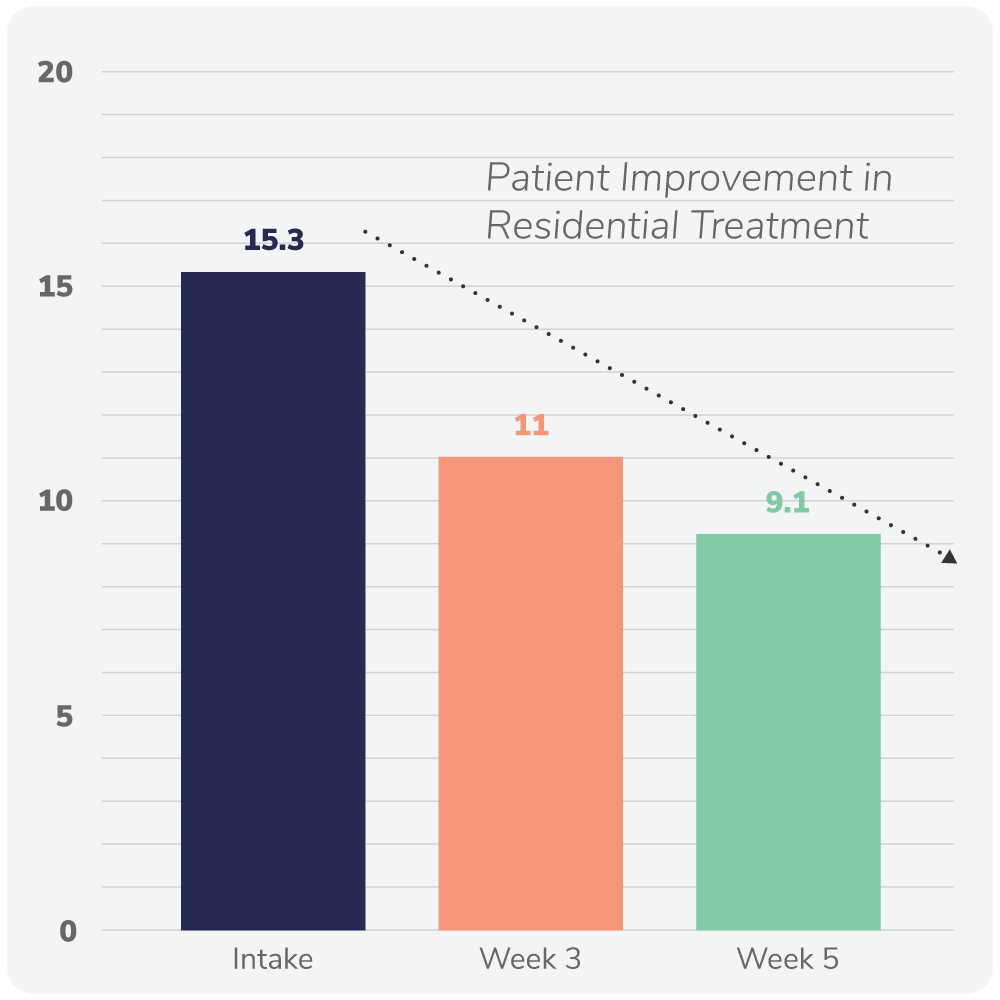
Anxiety outcomes in adolescent residential patients, as measured by the GAD-7.
Long-Term, Sustainable Results
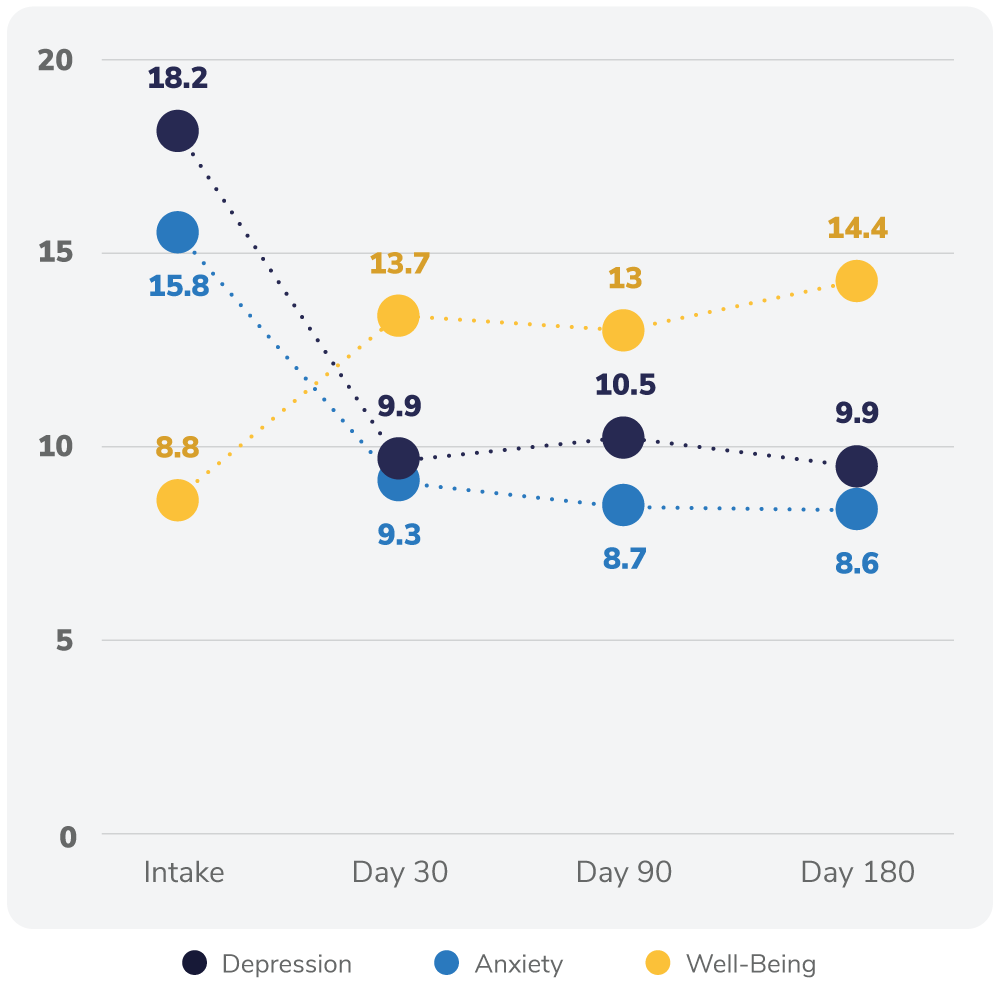
Post-discharge data shows that both teens and young adults maintained improvements, on average, after treatment, with all measures consistent or improved between day 30 and day 180. The data illustrates that the changes patients make within safe and caring therapeutic environments lead to long-term positive outcomes.
The chart shows young adult patients’ scores, on average, from intake through nine months after.
Program Purpose, Scope, and Necessity
When is residential treatment for teens more appropriate than outpatient care?
Residential treatment is often the right choice when a teen has acute mental health conditions that can’t be managed at home, like severe anxiety, suicidal behavior, or a substance use disorder. If a teen is a danger to themselves or others, or if they need constant support and are struggling with daily functioning, residential care is usually the best option.
What makes a residential treatment center necessary for a teen with co-occurring disorders?
A residential treatment center can provide the specialized care needed for teens with both mental health and substance use issues. Residential treatment centers offer a safe environment, comprehensive medical and clinical care, and round-the-clock support, which is often crucial for recovery.
How do I know if intensive therapeutic care is needed for my teen?
If your teen is struggling with severe emotional or behavioral problems that affect their daily life, it might be time to consider intensive therapeutic care, such as residential treatment. Signs include frequent crises, inability to function at school, or harmful behaviors that you can’t manage at home.
What to Expect and Daily Structure
What does a typical day look like in a teen residential treatment center?
A typical day usually includes individual therapy sessions, group activities, academic instruction, and experiential therapies, like art, music, yoga, and outdoor adventures. Teens in residential care follow a structured schedule that helps them build routines and learn new skills while processing past trauma and addressing their mental health issues.
How structured is daily life in a residential care program for teens?
Daily life in residential care is very structured, in order to provide stability, support, and the robust clinical schedule needed to growth and healing. This structure helps teens feel secure and allows them to focus on their treatment and personal growth.
Therapeutic Methods and Personalization
Which therapy modalities are commonly used in teen residential treatment (e.g., CBT, DBT, EMDR)?
Common therapies include Cognitive Behavioral Therapy (CBT), Dialectical Behavior Therapy (DBT), and Eye Movement Desensitization and Reprocessing (EMDR). These methods help teens understand their feelings and learn coping skills. At Newport, we also use Attachment-Based Family Therapy (ABFT) as an essential aspect of our family-focused care. Other common therapies used in residential programs include Motivational Interviewing and Acceptance and Commitment Therapy (ACT).
How do residential programs tailor treatment to each teen’s needs?
Residential programs assess each teen’s unique situation and create personalized treatment plans. This ensures that the therapy and support clients receive are the best fit for their specific challenges, history, and goals.
What role does family therapy play in residential programs?
Family therapy is essential, as it helps improve family communication, harmony, and trust. Teens and family members gain insight into each other’s experiences and work together toward healing. With Newport’s Attachment-Based Family Therapy model, teens restore connection with their parents or other family members, so they feel safe turning to family for support when they are struggling.
Staff, Safety, and Environment
What kinds of professionals typically make up a teen’s care team?
A teen’s care team usually includes psychiatrists, therapists, doctors, nurses, teachers, and more. These professionals work together to provide comprehensive care and support.
How do residential facilities ensure a safe and supportive environment 24/7?
Residential facilities have staff available around the clock to monitor clients and provide support. They also have rules and procedures in place to keep everyone safe and create a positive atmosphere.
Academic and Life Skills Integration
How do residential programs support educational continuity for teens?
Many residential programs have on-site schools or partnerships with local schools to ensure teens continue their education. This helps them stay on track academically while receiving the treatment they need. Newport Academy uses an accredited academic curriculum, supported by onsite teaching staff. We measure our academic outcomes by tracking students’ engagement, motivation, and organizational skills.
What life skills training do teens receive in a residential treatment setting?
Teens often learn important life skills like communication, problem-solving, and stress management. In addition, teens in residential care learn skills for improving executive functioning, such as planning ahead and staying organized. These skills improve their overall well-being and help prepare them for life after treatment.
Insurance, Cost, and Payment Options
What payment and insurance options are available for teen residential treatment?
Most residential treatment centers accept a wide range of health insurance plans, both in network and out of network, to help cover the cost of treatment. You can check with the treatment program and with your insurance provider for specific coverage details.
Can I get in-network coverage, and what if my plan is out of network?
If the treatment center is in-network with your insurance, you may pay less out of pocket. If it’s out of network, the center can usually negotiate with your insurance company to seek out-of-network coverage for treatment.
Selecting a Program
What should I ask a residential treatment center before enrolling my teen?
You should ask about the treatment methods used, staff qualifications, and how they handle emergencies. It’s also important to know about family involvement and aftercare support. Find out if the center publishes their treatment results for the public. In addition, ask about the residential treatment center’s affiliations with respected organizations in the field. For example, Newport Academy is fully accredited by The Joint Commission, the nation’s largest healthcare accrediting body.
Are there red flags to watch for when evaluating teen residential care?
Red flags include high staff turnover, lack of accreditation, or a focus on medication over therapy. If the facility seems more interested in profit than in the well-being of the teens, that’s a concern.
Transitions and Care Continuum
What’s the difference between short-term and long-term residential treatment?
Short-term treatment usually lasts a few weeks and focuses on immediate issues, while long-term treatment can last several months and addresses deeper problems. Long-term care often includes more comprehensive support and skill-building.
How do programs support teens transitioning back home or into less intensive care?
Programs typically provide aftercare planning, which includes step-down options, such as a full-day Partial Hospitalization Program, partial-day Intensive Outpatient Program, weekly therapy, and/or support groups. This helps teens adjust back to home life and maintain and build on the progress they made during treatment.
Challenges and Criticisms
How can parents assess if a program is properly regulated and quality-focused?
Parents can check if the program is accredited by recognized organizations and if it follows state regulations. Reading reviews and asking for success stories can also help assess the program’s quality.
Take the Next Step
Our staff is here to guide you every step of the way, from the admissions process to navigating insurance and paying for care. Our admissions team is standing by, ready to help your family begin to heal.