




It’s not unusual for young people to experience two different behavioral health issues at the same time. In fact, studies show that nearly half of adolescents who have a mental health condition have a substance use disorder as well, and up to half of children and adolescents with depression also have anxiety. When an individual is struggling with two different types of mental health and/or substance use disorders, this is referred to as co-occurring disorders or a dual diagnosis.
If your child is struggling with co-occurring disorders, seek professional help as early as possible to prevent your child’s symptoms from getting worse. Effective dual diagnosis treatment provides integrated care to treat both conditions simultaneously.
What Are Co-Occurring Disorders?
Co-occurring disorders, also known as dual diagnosis, refer to the presence of both a mental health disorder and a substance use disorder in an individual. Co-occurring can also signify that an individual has two mental health conditions such as anxiety and depression or a mental health disorder and health issue such as depression and chronic pain. Anorexia and bulimia, along with other eating disorders, commonly co-occur with anxiety or other mood disorders.
In teenagers, these disorders can manifest in various ways and can significantly impact their development, functioning, and overall well-being. If you suspect your teen has a co-occurring mental health and/or substance use disorders, it’s important to seek treatment early. Untreated disorders can lead to more severe symptoms, increased substance use, and greater difficulty in managing daily tasks.
Questions?
We know that reaching out can be difficult. Our compassionate team of experts is here to help. Call us at 877-929-5105 or complete the form below.
Dual Diagnosis vs. Co-Occurring Disorders
Co-occurring disorders is a broader term that refers to any combination of two or more disorders, including mental health conditions, substance use disorders, or other medical conditions. up to half of children and adolescents with depression also have anxiety.
Prevalence of Co-Occurring Substance Use Disorders in Teens
Studies have shown that as many as 45 percent of adolescents and young adults with mental health disorders also have a co-occurring substance use disorder. For example, data from Substance Abuse and Mental Health Services Administration (SAMHSA) reveals adolescents ages 12–17 with depression are more likely to use substances, including illicit drugs (29 percent vs. 11 percent), marijuana (22 percent vs. 8 percent), and engage in binge drinking (6 percent vs. 4 percent).
Common Co-Occurring Disorder in Teens
Common mental health disorders that tend to co-occur with substance use include:
-
Depression
-
Personality disorders
-
OCD
-
Attention Deficit Hyperactive Disorder (ADHD)
-
Post-Traumatic Stress Disorder (PTSD)
-
Anxiety disorders
-
Bipolar disorder
Signs and Symptoms of Co-Occurring Mental Health and Substance Use
As a parent, it’s important to watch for noticeable physical, emotional, and behavioral shifts in your child. Identifying co-occurring disorders in teens can be challenging, as the signs may overlap with typical adolescent behavior or other issues. However, there are specific indicators that may suggest the presence of both a mental health disorder and a substance use disorder. Here are some signs to look out for:
- Withdrawal from family and longtime friends, or a sudden shift to a new group of friends who may engage in substance use
- Increased anxiety and/or depression
- Declining academic performance
- Increased secrecy
- Extreme fluctuations in mood, including irritability, anger, or emotional outbursts
- Finding empty bottles or drug paraphernalia in their room
- Changes in sleep patterns, appetite, or physical health
- Neglecting personal hygiene
- Getting into trouble with the law or at school due to substance use
Treatment for Co-Occurring Disorders in Teens
Unfortunately, mental health issues don’t go away on their own. If your teen is struggling with co-occurring disorders, it is important to seek professional help from mental health specialists.
Effective treatment for co-occurring disorders involves an integrated approach that addresses all aspects of a client’s needs. Newport’s clinical model ensures adolescents develop effective coping strategies that address the root causes of their issues, leading to long-term recovery.
Additionally, teens with co-occurring disorders often have complex needs that require multifaceted care. At Newport, a multidisciplinary team develops personalized treatment plans designed to nurture the psychological, emotional, physical, and educational needs of each teen.
Each teen’s customized treatment plan includes:
- Individual therapy, which utilizes evidence-based approaches such as Cognitive Behavioral Therapy, Dialectical Behavioral Therapy, Motivational Interviewing, and EMDR
- Attachment-Based Family Therapy to address strained parent-child relationships, improve communication, and foster more authentic connection
- Group therapy for community-based healing with peers who understand and support one another
- Evidence-based experiential modalities like mindfulness, art therapy, music therapy, yoga, and outdoor Adventure Therapy in the area’s parks, canyons, and state beaches
- Fully accredited academic program to ensure teens keep up with their studies while getting treatment
- Full psychiatric care, including medication management, with our psychiatrists and psychiatric nurses
- Counseling to enhance teen coping skills, including stress management and positive behavioral changes
- Training in life skills like self-awareness, emotion regulation, and resiliency to improve mental and physical health
Causes of Co-Occurring Disorders in Adolescents
As a parent, it’s important to watch for noticeable physical, emotional, and behavioral shifts in your child. Identifying co-occurring disorders in teens can be challenging, as the signs may overlap with typical adolescent behavior or other issues. However, there are specific indicators that may suggest the presence of both a mental health disorder and a substance use disorder. Here are some signs to look out for:
Genetic Factors
A family history of mental health disorders or substance use disorders can increase the likelihood of a teen developing similar issues. Genetic predisposition plays a significant role in both mental health and problem substance use.
Trauma and Stress
Experiences of trauma, abuse, neglect, or significant life stressors (such as parental divorce or the death of a loved one) can lead to mental health issues and increase the risk of substance use as a coping mechanism.
Peer Pressure
Adolescents are particularly susceptible to peer influence, which can lead to experimentation with drugs or alcohol, especially if they are already struggling with mental health issues.
Psychological Factors
Mental health conditions such as anxiety, depression, ADHD, or PTSD can lead to substance use as a form of self-medication. Without healthy coping mechanisms in place, teens may use substances to alleviate symptoms or escape from emotional pain.
Results-Driven Treatment for Co-Occurring Disorders
Significant Improvements in Anxiety, Depression, and Well-Being
In 2024, Newport’s treatment yielded remarkable improvements in adolescent and young adult patients’ depressive and anxiety symptoms, subjective well-being, suicide risk, traumatic distress, and attachment to parents/caregivers.
Our care teams incorporate a wide variety of specializations—clinical, medical, psychiatric, experiential, dietary, life skills, and academic—to create transformative care experiences with exceptional results.
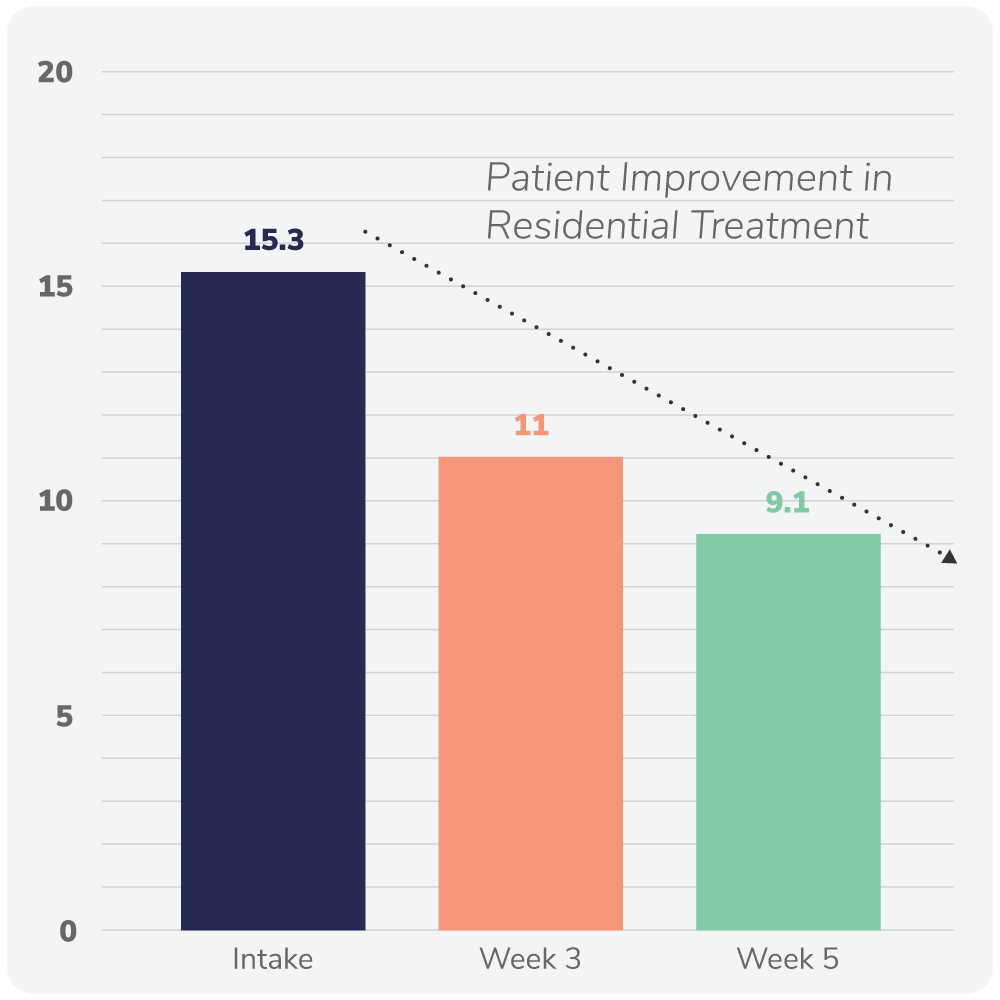
Anxiety outcomes in adolescent residential patients, as measured by the GAD-7.
Long-Term, Sustainable Results
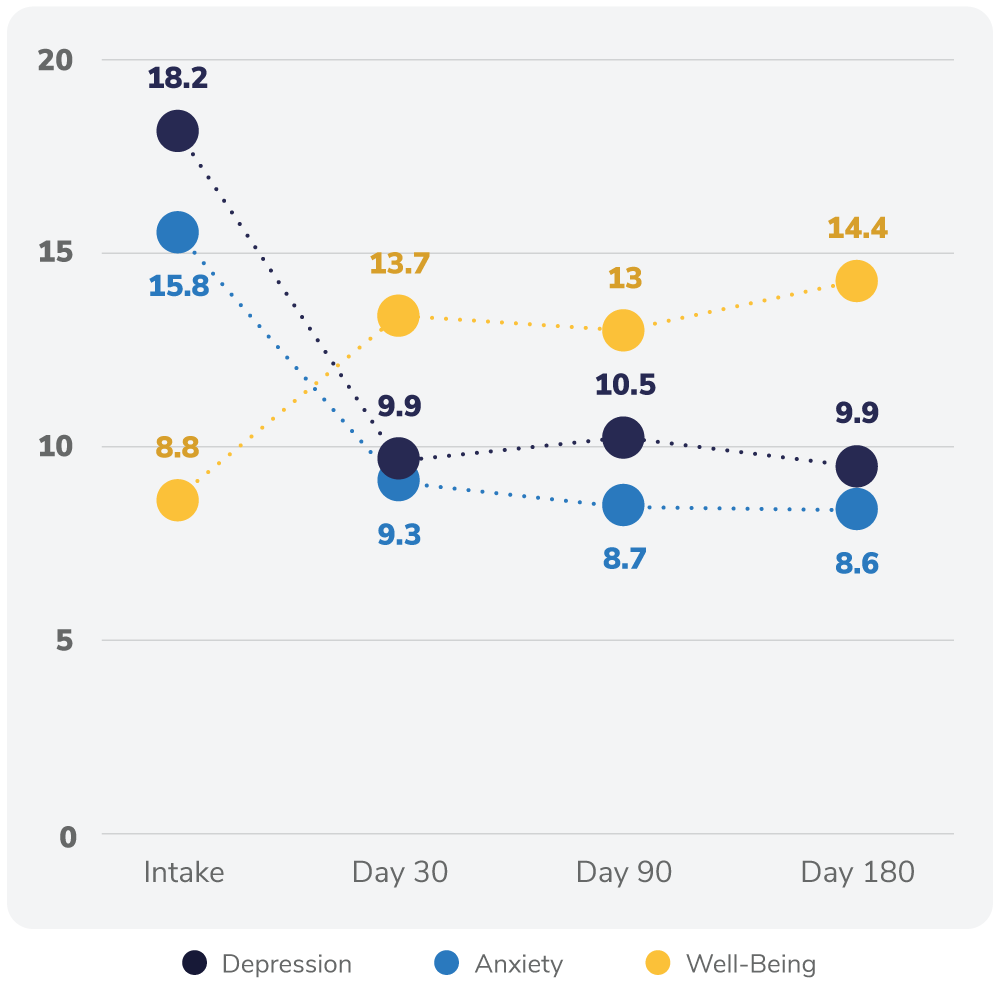
Post-discharge data shows that both teens and young adults maintained improvements, on average, after treatment, with all measures consistent or improved between day 30 and day 180. The data illustrates that the changes patients make within safe and caring therapeutic environments lead to long-term positive outcomes.
The chart shows young adult patients’ scores, on average, from intake through nine months after.
FAQs
What does the best treatment for co-occurring disorders involve?
Co-occurring disorder treatment is most effective when the two issues are treated simultaneously. An integrated, whole-person approach that addresses a teen’s psychological, emotional, physical, and educational needs offers the best chances for long-term success.
What are the three most common co-occurring disorders?
The three most common mental health conditions that co-occur with substance use are depression, anxiety, and ADHD.
What is an example of a co-occurring disorder in a teen?
A teen could suffer from depression and substance use, a dual diagnosis. Co-occurring disorders can also refer to two mental health disorders or health conditions that occur at the same time, such as OCD and an eating disorder.
Is ADHD a co-occurring disorder?
ADHD by itself is not a co-occurring disorder. However if an individual is also diagnosed with a substance use disorder, it is considered a dual diagnosis or co-occurring disorder.
What is the difference between dual diagnosis and co-occurring disorders?
Dual diagnosis specifically refers to the simultaneous presence of a mental health disorder and a substance use disorder. Co-occurring disorders is a broader term that refers to any combination of two or more disorders, including mental health conditions, substance use disorders, or other medical conditions.
Sources:
JMIR Public Health Surveill 2023;9:e46289
doi: 10.2196/46289
Take the First Step
Our compassionate staff is standing by, ready to help.
We'll answer your questions and ensure you have a path forward.